
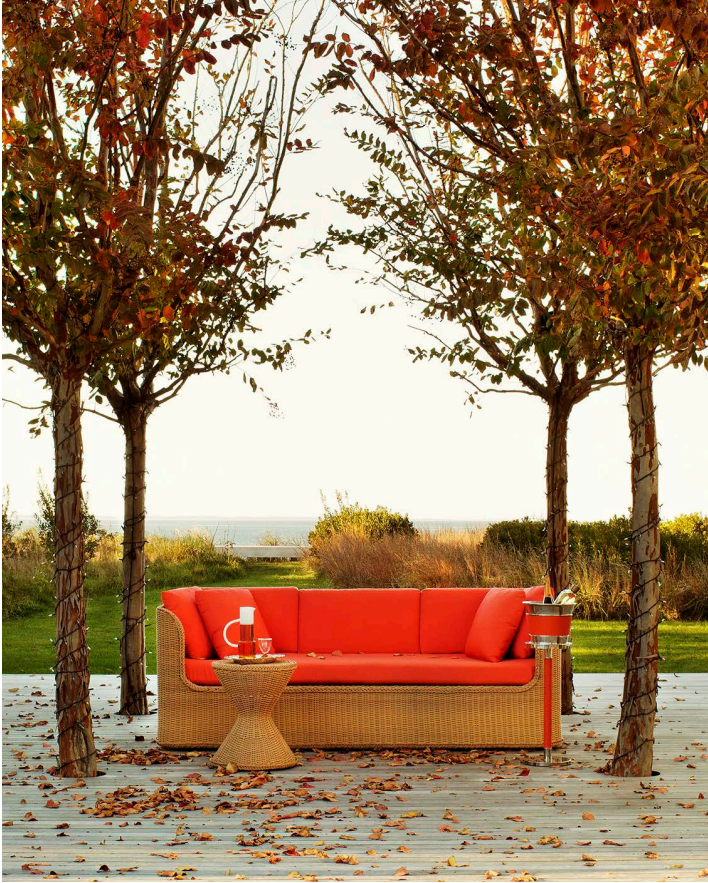
How outdoor environments are redefining hospitality, and the furniture built to sustain them.
Why Outdoor Furniture Matters More Than Ever
Across hotels, restaurants, and resorts, hospitality outdoor furniture is becoming a defining feature of modern brand experiences. They’re where brands show personality, where guests linger longest, and where revenue opportunities are expanding fastest.
As hospitality furniture investment shifts outward into courtyards, rooftops, terraces, and pool decks the furniture that supports those spaces carries enormous weight. It must be comfortable enough to keep guests seated, beautiful enough to photograph, and durable enough to survive year after year of use.
That’s the domain of commercial outdoor furniture: a category defined by its ability to merge design, endurance, and brand storytelling into a single asset.
The Role of Commercial Outdoor Furniture in Hospitality
Commercial outdoor furniture isn’t simply a scaled-up version of residential pieces. It’s part of the architecture of experience; shaping how guests move, interact, and remember a space.
In hotel outdoor furniture, it might divide poolside zones into moments of privacy and community. In a restaurant, it dictates the rhythm of service and the feel of the meal. In a resort, it becomes part of the landscape.
Performance as a Foundation
Every hospitality property operates under pressure from weather, staffing, and constant guest turnover. Furniture in those environments has to do more than look good; it must perform. High-quality, contract outdoor furniture must deliver both durability and comfort in demanding hospitality environments.
Durability, ease of maintenance, and comfort define the standard. Powder-coated aluminum frames, marine-grade rope, and all-weather wickers have become industry staples because they deliver strength without sacrificing aesthetic range.
Thoughtfully designed collections exemplify this evolution — merging craftsmanship and contract performance into pieces that are comfortable and built to last season after season. Guests equate quality seating with quality service.
Designing Spaces, Not Sets
While materials determine longevity, layout determines experience. Commercial outdoor furniture functions as both seating and spatial strategy.
- Hotels use it to choreograph zones. Think quiet retreats, social hubs, and event-ready areas. Modular banquettes and sectional systems allow layouts to change with programming.
- Restaurants rely on furniture to balance atmosphere and turnover. Comfortable chairs, well-spaced banquettes, and durable tabletops influence how long guests stay and how quickly a space resets.
- Resorts approach furniture as part of the landscape. Pieces must complement architecture and terrain, often blending natural textures with refined structure to blur indoor–outdoor boundaries.
The best outdoor programs think in collections, not one-off pieces. Cohesion across lounges, dining, and pool areas gives guests a seamless visual and sensory experience; a hallmark of high-end hospitality.
Material Intelligence
The modern market offers an extraordinary palette of materials, each suited to different climates, aesthetics, and operational goals.
- Aluminum: Lightweight, rust-proof, and endlessly adaptable in form and finish.
- All-Weather Rope: Adds warmth and tactility; ideal for coastal and rooftop environments.
- Resin Wicker: A timeless texture re-engineered for UV and moisture resistance.
- Teak & Engineered Woods: Bring natural luxury and sustainability credentials.
- Performance Fabrics: Deliver indoor softness with outdoor durability, resisting fading and moisture.
Selecting the right mix isn’t just about style. It’s about ensuring that every area of a property, from shaded terrace to salt-air deck, maintains the same standard of comfort and visual quality.
Sustainability and Lifecycle Thinking
The conversation around commercial outdoor furniture has moved decisively toward responsible longevity. Properties want furnishings that endures.
Forward-thinking outdoor furniture manufacturers are responding with recyclable frames, replaceable components, and modular systems that extend product life. Sustainable practice now means investing once and maintaining intelligently; an approach that supports both brand consistency and operational budgets.
Customization and Brand Identity
For many hospitality furniture brands, furniture is part of storytelling. Color, proportion, and texture reinforce the identity guests already recognize indoors.
Through customization like finish selections, material pairings, or subtle dimensional changes furniture becomes an extension of the brand’s vocabulary. Collections that offer flexibility across lines allow properties to maintain a cohesive look while adapting details for climate and usage.
Customization isn’t about indulgence, it’s about continuity; ensuring every space speaks the same visual language, from lobby to terrace.
Maintenance and Operational Ease
Even the most durable furniture benefits from routine attention. Successful outdoor programs integrate maintenance into operations from the start.
Quick-dry cushions, removable covers, and accessible hardware simplify upkeep.
Choosing modular systems allows staff to swap out components rather than full units, minimizing downtime and replacement costs.
Maintenance is where the real ROI of commercial outdoor furniture is proven — not in the first year, but in the fifth and beyond.
The Future of Outdoor Hospitality
As the line between indoor and outdoor design continues to dissolve, the expectation for comfort and style outdoors will only grow.
Next-generation commercial furniture emphasizes:
- Adaptive layouts that evolve with programming.
- Softer, more residential silhouettes made durable through technology.
- Sustainable transparency in sourcing and lifecycle.
- Integrated experiences — lighting, shade, and even charging built directly into furniture systems.
Banquettes, once seen purely as built-ins, now exemplify this evolution: modular, flexible, and brand-defining. They illustrate how thoughtful outdoor furniture can make space both profitable and personal.
Why It Matters
Outdoor areas are now among the most valuable square feet in hospitality. Investing in the right commercial outdoor furniture isn’t a design decision as much as it is an operational strategy.
Furniture dictates flow, comfort, and perception. It affects staffing efficiency, guest satisfaction, and brand longevity.
Whether it’s a poolside banquette that frames the horizon or a dining terrace unified by a single collection, the goal is the same; create environments that feel effortless, memorable, and unmistakably your own.
That’s the art, and the business, of modern outdoor hospitality.